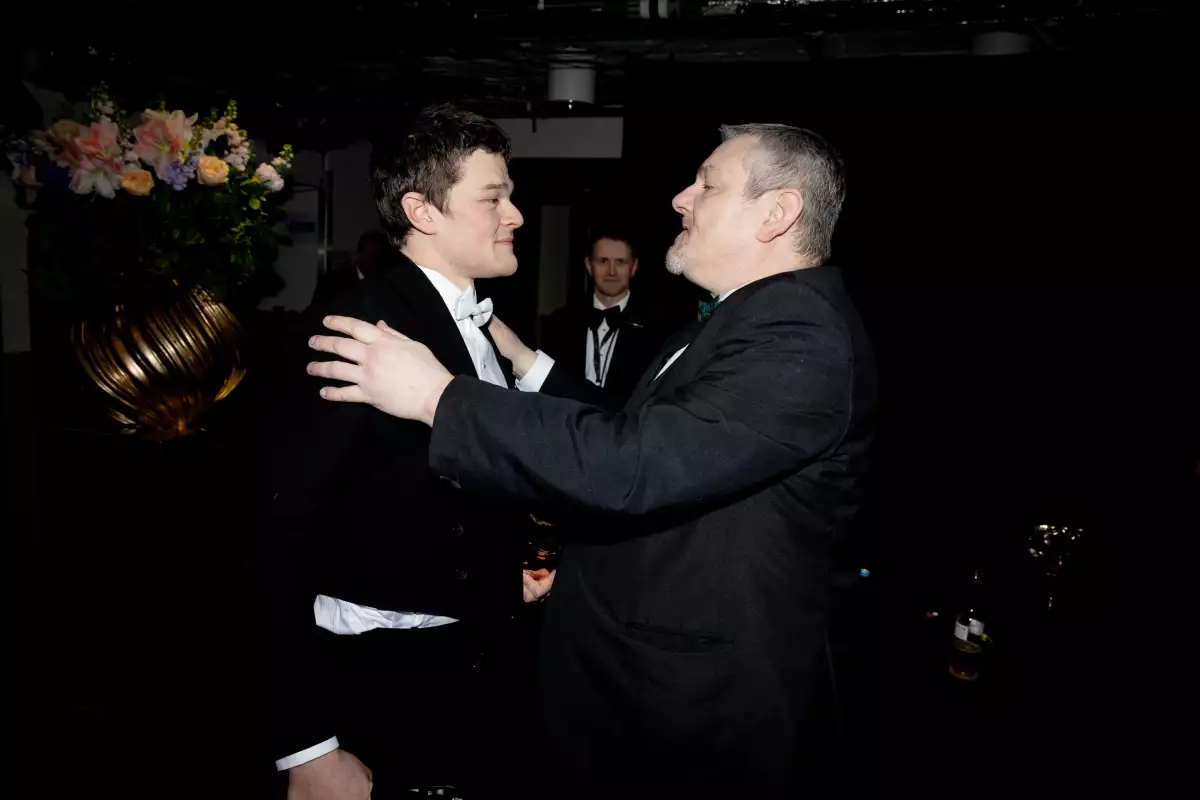
Bafta 2026: polémica por insulto en plena ceremonia
La más reciente edición de los premios Bafta quedó marcada por una controversia que involucró a la transmisión de la BBC y a uno de los invitados de la noche. El actor Robert Aramayo se llevó el galardón a Mejor Actor por su papel en la película I Swear, donde interpreta a un hombre con síndrome de Tourette, superando en la categoría a Timothée Chalamet y Leonardo DiCaprio.
La cinta está inspirada en la vida del activista John Davidson, quien padece este trastorno neurológico y asistió como invitado a la ceremonia. Durante la entrega del premio a Mejores Efectos Visuales —presentado por Delroy Lindo y Michael B. Jordan— Davidson lanzó un insulto racial como parte de un tic verbal asociado a su condición, lo que generó incomodidad inmediata tanto en el recinto como entre la audiencia televisiva.
…..Since I posted this BAFTA, BBC and John Davidson have apologised. I think it’s important to read and understand John’s Coprolalia apology to know he wasn’t beeing racist and it was defiantly not intentional…. John Davidson Apology: “I wanted to thank BAFTA and everyone involved in the awards last night for their support and understanding and inviting me to attend the broadcast. “I appreciated the announcement to the auditorium in advance of the recording, warning everyone that my tics are involuntary and are not a reflection of my personal beliefs. I was heartened by the round of applause that followed this announcement and felt welcomed and understood in an environment that would normally be impossible for me.” ***************** It was meant to be a big, celebratory night at the British Academy Film Awards but one moment has completely taken over the conversation this morning….. During the ceremony, John Davidson who has Tourette’s and is the inspiration behind the BAFTA nominated film I Swear shouted a racial slur from the audience while Michael B. Jordan and Delroy Lindo were presenting. 🤦🏽♀️ Guests had been told beforehand that he may make involuntary noises or vocal outbursts. Host Alan Cumming later acknowledged the strong language in the room and thanked everyone for their understanding. But let’s not pretend it wasn’t shocking. Michael and Delroy haven’t said anything publicly, but hearing that word shouted while you’re on stage must have been deeply uncomfortable and upsetting. There are a few layers here. Coprolalia, involuntary swearing can be part of Tourette’s, but it’s actually rare and doesn’t affect most people with the condition. So it’s fair to ask questions without being dismissive of Tourette’s itself. This should have been handled differently. Live TV, a global audience, two Black actors on stage, one of the most loaded words in the English language… was that risk properly thought through? Instead of the focus being on I Swear or the two wins for Robert Aramayo, the whole moment feels overshadowed and Michael and Delroy’s time at the BAFTAs for the first time ruined, both nominated. Baftas Baftashave put stronger measures in place to protect everyone. How do we champion inclusion and raise awareness, while also not forgetting the safety of everyone else? 💁🏽♀️
El conductor de la gala, Alan Cumming, ofreció disculpas en vivo por el lenguaje que pudo escucharse durante la transmisión. Sin embargo, la polémica creció cuando se supo que la BBC no editó el momento pese a que el programa se emitió con horas de retraso, lo que desató críticas en redes sociales y cuestionamientos sobre los protocolos de supervisión.
Un día después, la cadena explicó que el comentario fue producto de “tics verbales involuntarios” relacionados con el síndrome de Tourette y que no existió intención ofensiva. El caso abrió nuevamente el debate público sobre los límites de la transmisión en vivo, la responsabilidad editorial y la necesidad de mayor comprensión sobre este trastorno neurológico.
El síndrome de Tourette es una condición que suele manifestarse en la infancia, entre los 5 y 10 años, y se caracteriza por tics motores y vocales persistentes durante más de un año. Aunque la coprolalia —emisión involuntaria de palabras inapropiadas— es poco frecuente, es uno de los síntomas más asociados en el imaginario colectivo. No existe una cura definitiva, pero terapias conductuales y tratamientos médicos pueden ayudar a controlar los síntomas, mientras figuras públicas han contribuido a visibilizar y desmitificar el padecimiento.